
- All
- Product Name
- Product Keyword
- Product Model
- Product Summary
- Product Description
- Multi Field Search
Views: 0 Author: Site Editor Publish Time: 2026-09-13 Origin: Site


Unplanned downtime bleeds profits on mining and quarrying sites every single day. Primary crushing equipment faces brutal environments by design. However, a neglected machine quickly transforms into a severe plant-wide bottleneck. Poor operational parameters, erratic feed rates, and deferred maintenance inevitably lead to excessive wear. Output plummets. In this guide, you will discover actionable, heavy-duty strategies to maximize throughput and extend equipment lifespan. We will cover everything from stabilizing the feed to leveraging advanced wear metallurgy. These practical steps help you reclaim lost tonnage and boost your bottom line.
Consistent Feeding is Crucial: Maintaining a steady, choke-fed chamber prevents uneven wear and maximizes throughput.
Optimize the Closed Side Setting: Regularly adjusting the discharge gap ensures the ideal reduction ratio and prevents mechanical strain.
Pre-Screening Saves Energy: Scalping out fines before they enter the crushing chamber increases capacity and prevents dangerous packing.
Invest in Quality Wear Parts: Upgrading to high-durability manganese steel plates drastically reduces replacement intervals.
Preventative Maintenance Prevents Failures: Daily inspections of lubrication, tension rods, and toggles are non-negotiable for long-term productivity.
Before changing plant operations, you must establish a mechanical baseline. Evaluating operations requires looking far beyond basic daily tonnage. Plant managers must analyze the specific metrics dictating long-term efficiency.
Manufacturers typically provide a theoretical throughput capacity based on ideal laboratory conditions. They assume standard rock hardness and a perfectly continuous feed. Real-world actual output rarely matches these theoretical numbers. Environmental variables and operator efficiency constantly disrupt the material flow. Actual output is the precise tonnage processed over a specific shift. It factors in minor stoppages and loader delays. Bridging the gap between theoretical capacity and real-world output requires stabilizing the feed rate to minimize idle running time.
The reduction ratio represents the relationship between the maximum feed size and the final product size. For a standard primary unit, the optimal reduction ratio typically falls between 3 to 1 and 6 to 1. Picture a primary station constantly halting because the secondary cone is overwhelmed. This is a classic symptom of poor ratio management. Pushing the machine beyond a 6 to 1 ratio significantly increases the mechanical strain on the pitman and eccentric shaft. This inevitably leads to premature bearing failure. Furthermore, maintaining the correct ratio ensures that downstream crushers receive properly sized aggregate.
Equipment availability measures the exact percentage of time the machine is operational and actively crushing rock. This excludes scheduled maintenance windows. Tracking mechanical availability is the ultimate metric for site productivity. Specifically, a plant operating smoothly at 80 percent capacity with 95 percent availability will consistently outproduce a facility pushed to 100 percent capacity that suffers from violent breakdowns.
Moving from theoretical metrics to physical operations, the method by which material enters the crushing chamber is arguably the single most critical factor in operational efficiency. Poor feeding practices remain the leading cause of asymmetrical wear, high energy consumption, and catastrophic mechanical failures.
Choke feeding involves keeping the crushing chamber adequately full at all times. By maintaining a continuous head of material above the crushing zone, operators promote a phenomenon known as inter-particle crushing. In this highly efficient state, the rocks grind against each other under immense pressure. They do a portion of the breaking work themselves. This dynamic reduces direct friction on the jaw dies and produces a more uniform product shape. Achieving this requires a highly controlled, automated vibrating feeder system to prevent the hopper from overflowing.
Feeding oversized boulders into the chamber invites immediate blockages. As an industry-standard rule of thumb, the maximum dimension of the feed material should never exceed 80 percent of the gape opening. If a machine features a 1000mm gape, rocks larger than 800mm must be fractured by a hydraulic hammer before ever reaching the primary feeder. Exceeding this limit causes rocks to bridge across the top of the chamber. Production halts entirely while operators scramble to clear the jam.
Material extracted straight from a blast face naturally contains fines, loose dirt, and undersized aggregate. When evaluating the operational dynamics of a heavy-duty jaw crusher, allowing these fines to enter the chamber is highly detrimental. They consume valuable volumetric space without requiring further reduction. When mixed with ground moisture, fines cause packing in the lower nip angle. This exerts immense, uncrushable pressure on the machine frame. It spikes motor amperage and can physically shatter the toggle plate. Utilizing a vibrating grizzly feeder with properly spaced bars to scalp out fines immediately increases throughput.
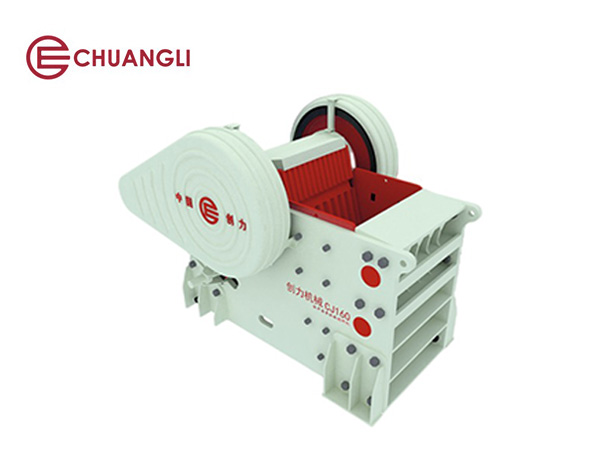
The Closed Side Setting dictates the maximum size of the discharged material. It is the minimum distance between the stationary jaw plate and the movable jaw plate at the very bottom of the crushing cycle. This gap directly influences the electrical energy draw of the motor.
If the gap is calibrated to 100mm, the vast majority of the crushed rock will successfully pass through a 100mm screen mesh downstream. Setting this gap accurately ensures that the workload is perfectly distributed between the primary and secondary crushing stages. In practice, seasoned operators use a lead weight on a wire or a specialized ultrasonic sensor to measure this gap safely.
As the corrugated teeth on the wear plates grind down through friction with abrasive rock, the gap naturally widens. If left unadjusted, the product size gradually swells. This throws the entire plant out of balance. To maintain optimal efficiency, plant managers must adapt their calibration schedules to the specific geology of their site.
Material Type | Rock Hardness | Recommended CSS Range | Calibration Frequency |
|---|---|---|---|
High-Silica Quartzite | Extremely Hard | 120mm - 180mm | Daily |
River Gravel | Hard / Abrasive | 100mm - 150mm | Every 2-3 Days |
Limestone | Soft / Non-Abrasive | 80mm - 120mm | Weekly |
Recycled Concrete | Variable / Contains Rebar | 100mm - 160mm | Bi-Weekly |
While plant managers may be tempted to tighten the gap to produce smaller material and relieve secondary crushers, this poses a severe mechanical risk. Every unit has a minimum setting limit dictated by its kinematic geometry. Setting the gap tighter than the manufacturer recommendation causes the crushing forces to exceed the structural limits of the steel frame. This inevitably leads to severe chamber packing, extreme stress on the eccentric shaft bearings, and catastrophic toggle plate failure.
Heavy-duty mining equipment operates in brutal environments characterized by abrasive dust, violent vibration, and extreme impact forces. Consequently, implementing a rigid preventative maintenance schedule is the only reliable method to prevent sudden mechanical failures.
Visual and auditory inspections must be conducted before the machine is powered on. Operators must check V-belt tension for loose or frayed drive belts that cause power loss. Intense vibration can back out a tightened foundation bolt within hours. Listening for rhythmic metallic knocking often indicates a loose toggle seat or a failing roller bearing. Using an infrared thermometer to monitor the housing temperatures of the main frame provides early warning signs of friction.
Friction is the ultimate enemy of any mechanical system. The massive eccentric shaft bearings bear the absolute brunt of the crushing force and require precise lubrication. Operators must use the exact grade of lithium-complex grease specified by the manufacturer. Wiping zerk fittings clean before attaching a grease gun is critical to prevent injecting grit into the housing. Crucially, over-greasing is just as dangerous as under-greasing. Pumping excessive grease into a bearing housing increases internal pressure. The lubricant churns, overheats, and eventually blows out the protective labyrinth seals.
Located at the lower rear of the crusher, the tension rod and spring assembly pulls the heavy pitman back during the return stroke. This keeps the toggle plate firmly seated in its grooves. If the tension spring is too loose, the toggle plate will rattle violently, causing severe wear to the seats. If the spring is overly compressed, it adds unnecessary mechanical resistance, increasing the parasitic load on the motor. Regular measurement of the spring compression length is vital for long-term jaw crusher performance.
The stationary and movable jaw dies are the only components that physically fracture the rock. Their metallurgical composition and physical profile dictate how efficiently the material breaks. These factors determine how many weeks the machine can run before requiring a costly shutdown.
Selecting the correct tooth profile depends entirely on the geological characteristics of the feed material. Using a flat profile on hard, round river rock will cause the stones to shoot back out of the chamber. Standard coarse profiles feature deep grooves that allow fines to pass easily while providing excellent grip on large rocks. Corrugated profiles feature smaller, tighter teeth, making them ideal for recycling concrete and producing a highly uniform product shape.
Modern high-performance units demand rigorous part selection to handle extreme tonnage. Consider the engineering behind a premium unit like the CJ150 model. It features a massive 1200mm by 1500mm feed opening and is engineered to process up to 1040 tons per hour. Its hydraulic wedge block system allows a discharge adjustment range of 150mm to 300mm. Handling such immense volume requires premium austenitic manganese steel plates. Alloyed at 18 percent or 22 percent manganese, this steel work-hardens upon impact. The outer microscopic layer hardens from the stress, while the inner core remains ductile and impact-resistant.
Because the crushing stroke is longest and tightest at the bottom of the chamber, the lower third of the jaw die wears out exponentially faster than the top. To maximize the lifespan of these expensive castings, operators must practice flipping. Once the lower section is worn down by approximately 50 percent, the plate should be removed, rotated 180 degrees, and reinstalled. This simple engineering practice can extend the life of the plate by up to 50 percent.
Recent industry analyses reveal a decisive pivot toward digitized material processing and smart quarries. The aggregate industry is rapidly moving away from reactive repairs. Instead, operations now embrace data-driven proactive management. Modern quarries integrate IoT-enabled predictive maintenance systems directly into their primary circuits.
Sensors now monitor electric motor amperage draw in real-time. If the chamber begins to pack with sticky clay, the system detects the amperage spike instantly. The automated control system then automatically slows the vibrating grizzly feeder. This allows the machine to clear itself without human intervention, preventing structural damage. Similarly, thermal sensors mounted directly on bearing housings detect microscopic temperature increases. Maintenance teams can analyze this data to schedule targeted greasing weeks before a catastrophic bearing failure occurs. This technological shift is redefining plant efficiency standards across the globe.
Even with perfect preventative maintenance and state-of-the-art feed automation, operators will inevitably face sudden production bottlenecks. Knowing how to diagnose and troubleshoot these issues systematically minimizes costly downtime.
Bridging occurs when a massive boulder wedges at the upper gape of the crushing chamber. When this happens, the sound of the machine changes to a hollow echo, and throughput drops to zero. Never send a worker into the chamber with a pry bar while the machine is active. The safest solution is installing a stationary hydraulic rock breaker boom next to the hopper. The operator uses the hydraulic hammer to fracture the oversized rock directly inside the chamber.
Packing is a dangerous condition where sticky clay, mud, or saturated fines accumulate in the lower crushing zone. The material compacts into a solid, brick-like mass that the jaw cannot fracture. Understanding the internal structure of a CJ150 jaw crusher reveals how heavy-duty pitmans handle standard stress, but uncrushable packing transfers extreme, damaging forces directly to the toggle plate. If packing occurs, immediately cut the feed. To prevent recurrence, increase the efficiency of the pre-screening grizzly feeder.
If maintenance teams notice that the left side of the stationary jaw plate is wearing out significantly faster than the right side, crushing capacity is being wasted. Uneven wear is almost exclusively caused by off-center feeding. Realign the feed chute or weld heavy-duty deflector plates inside the hopper to ensure the rock drops dead-center. Symmetrical feeding balances the load on the eccentric shaft bearings and maximizes plate lifespan.
There is no single universal production rate. Actual output depends entirely on the specific model size, the density and hardness of the rock, the moisture content, and the current Closed Side Setting. Small utility crushers used in recycling may process 50 to 100 tons per hour. Massive primary crushers in commercial mining operations easily exceed 1000 tons per hour. A good production rate is one that consistently meets the manufacturer theoretical capacity for your specific gap setting without causing the motor to stall.
Increasing capacity requires a holistic approach to the entire plant. First, ensure rigorous pre-screening. Removing dirt and fines before they enter the chamber frees up physical space for crushable rock. Second, maintain a continuous, choke-fed chamber to promote inter-particle crushing. Third, regularly adjust the discharge gap to compensate for jaw plate wear. Finally, ensure the drive belts are properly tensioned so maximum electric motor power transfers to the heavy flywheel without slippage.
Stalling is typically caused by one of three operational errors. The most common cause is chamber packing, where wet fines compress into an uncrushable mass, exceeding motor torque capacity. The second cause is attempting to crush rocks physically larger than the gape opening. The third cause is electrical or mechanical inadequacy, such as loose V-belts failing to transfer power, or a sudden drop in power supply voltage during peak load.
The replacement interval varies wildly based on the geological composition of the feed material, specifically its silica content. In highly abrasive applications, such as crushing river gravel or quartzite, manganese plates may wear out in a matter of weeks. Conversely, when crushing soft materials like limestone, a set of plates can last for over a year. Operators must rely on regular visual inspections and scheduled physical measurements of the tooth profile.
The toggle plate serves two distinct and vital engineering functions. Mechanically, it acts as the lower pivot point for the pitman, determining the precise angle and trajectory of the crushing stroke. More importantly, it functions as a mechanical safety fuse. If an uncrushable object enters the chamber, crushing forces spike instantly. The toggle plate is intentionally designed to fracture or bend under this extreme load, safely dropping the pitman and protecting the expensive main frame.
High moisture content drastically reduces efficiency. Dry rock fractures cleanly and falls through the chamber via gravity. When moisture exceeds 4 to 5 percent, fines become sticky and cling to the corrugated teeth of the jaw plates. This sticky material accumulates in the lower chamber, causing severe packing and bridging. Operators dealing with high moisture must optimize their pre-screening grizzly feeders to remove wet dirt before it enters the primary circuit.
The nip angle is the angle formed between the stationary and movable jaw plates. For optimal throughput and gripping capability, the ideal nip angle generally falls between 18 and 22 degrees. If the angle is too wide, hard rocks will slip and shoot upward instead of being crushed, severely reducing capacity. If the angle is too narrow, the machine loses volumetric capacity and the reduction ratio drops. Manufacturers engineer the kinematic geometry to maintain this angle, but improper toggle plate selection can negatively alter it.
Improving output is an ongoing process that demands rigorous engineering oversight. It requires a combination of consistent feeding, exact gap calibration, proactive maintenance, and the utilization of high-quality wear metallurgy. A highly productive primary station sets the pace for the entire operation. Investing time and resources into mechanical optimization pays off exponentially in daily tonnage. Evaluate your current operational parameters, address your feed mechanics, and consider upgrading your primary jaw crusher setup today. Explore high-capacity, heavy-duty solutions engineered for brutal environments at Chuangli Crushers to secure a more profitable tomorrow.


