
- All
- Product Name
- Product Keyword
- Product Model
- Product Summary
- Product Description
- Multi Field Search
Views: 0 Author: Site Editor Publish Time: 2026-08-31 Origin: Site


Quarry and mining operations are rapidly shifting. They are moving away from reactive maintenance. Today, proactive throughput optimization is the priority. Traditional primary crushers struggle here. They rely heavily on manual inspections. Operators must use their intuition. This reliance causes severe bottlenecks. It leads to unoptimized Closed Side Settings (CSS). It also triggers unexpected downtime and inconsistent product quality.
Telemetry changes this dynamic completely. Continuous sensor-driven feedback loops now capture real-time operational data. This separates standard machines from modern technology. A Smart Jaw Crusher utilizes these advanced sensors. It reacts to load changes instantly. You no longer guess when to adjust settings. The machine provides exact data. We will explore how these sensors monitor performance. You will learn the hidden costs of unmonitored equipment. We will also cover essential evaluation criteria.
Smart jaw crushers monitor performance through a network of strategically placed sensors (vibration, load, CSS, cavity level) integrated with local PLCs and cloud platforms.
Real-time data translates directly to operational ROI by enabling automated CSS adjustments, preventing catastrophic toggles, and managing energy spikes.
Evaluating an automated jaw crusher requires looking beyond marketing dashboards; focus on sensor durability in harsh environments, open data architecture, and local dealer support.
Implementation success depends on robust site connectivity and operator adoption, not just machine capabilities.
Primary crushing sets the pace for your entire plant. If it slows down, downstream operations suffer. Traditional machines operate blindly. They cannot communicate their internal stresses. This silence creates massive inefficiencies.
Upstream blast fragmentation is rarely perfect. Variable blast results create unpredictable feed sizes. Traditional crushers cannot adapt to these rapid changes. Oversized boulders cause them to jam. An excessive influx of fines makes them run inefficiently under load. The machine continues operating at a static setting. It either starves for material or chokes. Operators often notice the bottleneck too late. By then, the throughput has already dropped significantly.
Liner wear happens constantly. The jaw plates degrade over time. The Closed Side Setting (CSS) slowly widens. You must adjust the CSS to maintain product size. In older models, this requires shutting down the plant. Operators physically measure the gap. They then manually insert shims or turn adjustment bolts. This process takes valuable production time. Frequent stops destroy your daily yield. Plant managers often delay these adjustments. They prefer keeping the machine running. However, this delay produces oversized material. The secondary crusher then works much harder.
Unmonitored primary crushing invites sudden disasters. Toggle plates can fail unexpectedly. Eccentric shaft bearings can overheat in minutes. Traditional operations treat these events as normal risks. They pay a heavy financial price for this mindset. A broken shaft stops production for days. Emergency repair parts cost a premium. Metal-to-metal contact destroys expensive components rapidly. Condition-based monitoring prevents these scenarios. It detects minute temperature spikes early. It alerts you before the damage occurs. You replace a worn bearing instead of an entire shaft assembly.
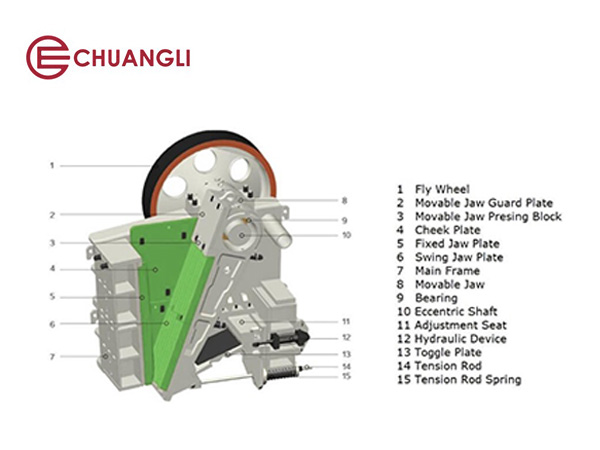
Data collection requires rugged hardware. The crushing environment involves extreme dust and violent vibrations. An automated jaw crusher relies on specialized sensors. These instruments must survive harsh conditions. They form the nervous system of the machine.
Sensor Type | Location | Primary Function | Monitored Metric |
|---|---|---|---|
Ultrasonic/Radar | Above feed opening | Manage choke feeding | Cavity material level |
Linear Position | Hydraulic cylinders | Track jaw position | CSS gap width |
Amperage/RPM | Primary drive motor | Detect power spikes | Load and speed |
Thermal/Vibration | Main bearings / Pitman | Prevent mechanical failure | Temperature and oscillation |
Optimum performance demands choke feeding. The crushing chamber must remain full. It should not overflow. Ultrasonic or radar sensors hover above the feed opening. They constantly measure the rock level. If the cavity empties, they signal the feeder to speed up. If the cavity overflows, they slow the feeder down. This constant communication ensures a continuous optimal load.
Liner wear is no longer a guessing game. Hydro-pneumatic cylinders replace manual shims. Linear sensors monitor the exact position of the swing jaw in real-time. As the manganese liners wear down, the gap widens. The machine detects this change. It uses hydraulic pressure to push the jaw forward. It self-adjusts under load. This compensates for liner wear instantly. Your product size remains perfectly consistent all day.
Hard rock spikes threaten the motor. Sudden encounters with extremely hard ore draw massive current. Amperage and RPM sensors monitor the primary motor. They detect these power spikes immediately. The control system responds by throttling feed rates. It prevents the motor from stalling. It also protects the drive belts from slipping and burning.
Heat and excessive vibration destroy bearings. Thermal sensors sit directly on the main bearings and the pitman. They track temperature trends minute by minute. Vibration sensors measure mechanical oscillation. They detect misalignment early. They also spot lubrication failures. You receive an alert before metal-to-metal contact occurs. This gives maintenance teams time to intervene safely.
Gathering data is only the first step. The true value lies in automated action. Intelligent crushing equipment translates raw numbers into better production metrics. It removes human reaction time from the equation.
Poor upstream blast fragmentation happens frequently. You might receive oversized boulders one hour. You might get excessive fines the next. The system reacts dynamically to these changes.
Oversized Boulders: The cavity sensor detects a blockage. The motor load spikes. The system temporarily increases the CSS. It lets the boulder seat deeper. It then crushes it safely.
Excessive Fines: The load drops significantly. The material rushes through too fast. The system tightens the CSS slightly. It ensures the fines do not overwhelm the secondary cone crusher.
Electricity costs consume a huge portion of operating budgets. Smart machines help you find the operational "sweet spot". They correlate two vital metrics.
The system measures exact throughput (tons per hour).
It tracks precise energy consumption (kWh).
It calculates the specific energy used per ton (kWh/t).
You can adjust the CSS and feed rate to optimize this ratio. Running the crusher slightly slower might reduce energy consumption massively. You maintain acceptable throughput while slashing your power bill.
Industrial Internet of Things (IIoT) connects your machine to the cloud. The platform stores historical data trends. It analyzes jaw die wear rates over months. It predicts exactly when the liners will fail. This allows your procurement team to order manganese liners just-in-time. You avoid keeping expensive inventory sitting on shelves. You also eliminate panic orders for overnight shipping. You schedule the liner change for a planned maintenance day. This minimizes disruption to your overall production schedule.
Not all smart machines deliver on their promises. Marketing dashboards often look impressive. However, real-world mining conditions reveal their flaws quickly. You must evaluate these platforms critically.
Delicate electronics fail in high-vibration environments. High dust levels blind cheap sensors. Extreme temperatures fry basic wiring. Assess how the OEM protects their sensors. They should use armored cabling. Sensor housings must feature high IP ratings. Ask about redundancy. If a primary cavity sensor fails, does the machine shut down? A well-designed smart jaw crusher uses secondary fallback logic. It relies on motor load data to guess cavity levels temporarily. This keeps you running until the shift ends.
Common Mistake: Buyers often ignore sensor replacement costs. They focus only on the initial machine price. Always ask your dealer about the lifespan and cost of replacement sensors.
Your plant likely uses existing SCADA or DCS systems. You want all your data in one place. Evaluate the machine's software architecture carefully. Some OEMs use open data protocols. They integrate seamlessly seamlessly into your plant network. Others trap your data in a proprietary dashboard. They force you to pay a monthly subscription fee to view your own statistics. Prioritize open ecosystems. They provide greater flexibility for future plant expansions.
Technology occasionally fails. Sensors become blinded by thick mud. Automated logic can misinterpret a situation. Operators must retain control. Ensure the machine offers safe manual overrides. The interface must be intuitive. An operator should easily switch to manual hydraulic control. They need to clear a jam manually if necessary. Complete reliance on automation poses a safety risk. Good design empowers the operator.
Buying the machine is easy. Making it work on site is harder. Implementation success depends on several external factors. You must prepare your site and your team.
Advanced remote monitoring requires data transmission. Deep quarries block standard cellular signals. Remote mining sites lack basic internet infrastructure. Advanced features fail without reliable uplinks. You must establish a robust mesh network first. Alternatively, install dedicated cellular or satellite uplinks. Do not expect cloud dashboards to work automatically. The local PLC will handle basic safety tasks. However, IIoT predictive features require a strong connection to the outside world.
Sensors do not remain perfect forever. Heavy vibrations cause calibration drift over time. Linear position sensors might lose their exact zero point. Thermal sensors might read slightly off. A smart crusher is only as smart as its baseline data. Acknowledge this reality early. Your maintenance team must perform regular recalibrations. They need to verify the CSS gap physically once a month. They must check sensor readings against reality. Ignoring calibration leads to flawed automated decisions.
Operators are accustomed to older methods. They rely on auditory cues. They listen to the pitch of the motor. They watch the rock flow visually. Introducing digital screens changes their routine entirely. This requires dedicated change management. You must upskill your operators. Teach them to interpret data trends. Show them how amperage spikes correlate to rock hardness. If you skip this training, they will ignore the screens. They will switch the machine to manual mode constantly. The investment in technology will be wasted.
Performance monitoring extends far beyond fancy dashboards. It focuses on automated intervention. It prevents unplanned downtime effectively. Intelligent crushing technology optimizes throughput by adapting to variable feed conditions instantly. It protects critical components from catastrophic failure. It replaces manual guesswork with precise data.
When shortlisting equipment, look past superficial software features. Prioritize platforms offering proven sensor reliability. Demand transparent data integration. Ensure your local dealer provides strong technical support for the electronic components.
Next Steps for Operators:
Audit your current primary crushing bottlenecks thoroughly.
Calculate the exact hours lost to manual CSS adjustments monthly.
Review your recent unplanned downtime events related to bearing or toggle failures.
Assess your site's current network connectivity in the crushing zone.
Determine which automated features offer the fastest payback period for your specific operation.
A: Yes, partially. Basic condition monitoring (vibration, temp) and motor load sensors can be retrofitted. However, full automated CSS adjustment usually requires specific hydraulic architectures built into modern OEM designs.
A: Smart monitoring systems detect sudden, extreme spikes in hydraulic pressure or motor amperage, instantly opening the CSS or triggering a safety release to pass the material and prevent catastrophic shaft or toggle failure.
A: No. Critical safety and automation features (like CSS adjustment and overload protection) run on the machine's localized PLC. Internet connectivity is only required for remote IIoT monitoring, long-term data logging, and predictive maintenance alerts.


