
- All
- Product Name
- Product Keyword
- Product Model
- Product Summary
- Product Description
- Multi Field Search
Views: 0 Author: Site Editor Publish Time: 2026-08-08 Origin: Site


High-tonnage continuous mining operations live or die by the reliability of their primary crushing circuit. A single bottleneck at this critical first stage immediately halts all downstream production. Standard crushers handle intermittent loads or softer aggregates adequately. However, high-yield mineral extraction requires fundamentally different equipment. This machinery must withstand extreme dynamic loads, abrasive ores, and punishing 24/7 duty cycles. Upgrading to a Heavy Duty Jaw Crusher represents a strategic capital investment. This vital decision mitigates unplanned downtime and stabilizes the material feed rate for secondary crushing circuits. In the following sections, you will learn how core mechanical specifications directly impact production throughput. We will explore how dedicated mining units outpace construction alternatives in long-term durability. Finally, you will discover a clear framework to evaluate long-term equipment value, optimize downstream integration, and ensure your primary crushing circuit delivers relentless performance.
Heavy duty jaw crushers rely on higher flywheel inertia and reinforced cast-steel frames to maintain throughput during continuous, high-tonnage feeding.
Selecting a true mining jaw crusher over a standard construction-grade unit prevents structural fatigue and extends wear part lifecycles.
Evaluating a high capacity jaw crusher requires mapping its mechanical specifications (e.g., toggle plate kinematics, nip angle) directly to your specific ore abrasiveness and production targets.
Successful implementation requires assessing downstream integration risks, dynamic foundation loading, and preventative maintenance accessibility.
The financial impact of a stalled primary crusher is severe. A continuous operation loses significant revenue when the primary circuit blocks. Downstream equipment sits idle while maintenance teams clear jammed rock. These frequent interruptions destroy daily production targets. Profit margins shrink rapidly under these inefficient conditions. Operations processing highly abrasive materials face unique challenges daily. Materials like iron ore, basalt, and granite test standard equipment limits. These hard rocks demand exceptional mechanical resilience from crushing machinery. Standard machines simply cannot handle these punishing operating conditions.
Capacities exceeding 500 tons per hour require robust engineering. Operators often push standard equipment beyond safe structural limits. This practice leads to premature wear and catastrophic frame failures. You cannot sustain high tonnage without adequate primary reduction. A fluctuating output from the primary stage creates widespread problems. Downstream circuits suffer when feed rates become erratic. Secondary and tertiary crushers rely on a consistent, steady feed. They operate at peak efficiency only when fully choke-fed.
Inconsistent feeds spike energy consumption across the entire plant. Unsteady material flow causes secondary crushers to draw uneven power. This irregular power draw increases electrical costs significantly. Furthermore, a fluctuating feed accelerates wear on secondary cone crushers. Uneven chamber filling causes irregular manganese wear profiles. We must establish absolute consistency at the primary stage. Only a ruggedly built machine guarantees this required consistency. Resolving this primary bottleneck unlocks the full potential of your plant.
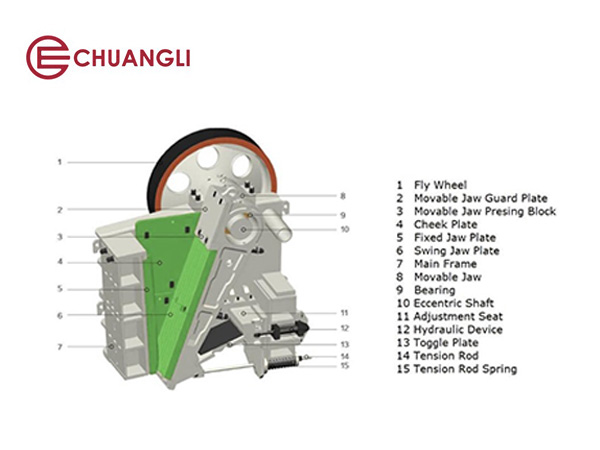
The geometric design of the crushing chamber dictates production success. Engineers carefully calculate the kinematics of the moving jaw. A proper nip angle ensures a continuous material flow. This specific angle grabs rock firmly without slipping. Slippage causes rock to bounce or "boil" inside the chamber. Boiling rock wastes energy and accelerates jaw die wear. We prevent this by matching the nip angle to rock properties.
Rotational inertia plays a massive role in continuous crushing. Oversized, dynamically balanced flywheels store immense kinetic energy. They release this energy when encountering peak-hardness rock spikes. This stored energy powers through tough rocks without stalling. The drive motor remains protected from sudden, damaging load spikes. Steady momentum ensures consistent throughput during heavy surges.
Frame structure represents another critical equipment specification. Manufacturers offer welded, bolted, cast-steel, or modular frame designs. Heavy-duty designs prioritize stress-relief during the manufacturing process. Engineers anneal frames to prevent micro-fractures under high-tonnage loads. A rigid frame resists the immense twisting forces of crushing. It keeps bearings aligned and extends the lifespan of moving parts. To properly evaluate a high capacity jaw crusher, review these core features:
Chamber Kinematics: Evaluate the toggle plate angle and stroke length for optimal material drawing.
Flywheel Mass: Ensure rotational inertia matches the compressive strength of your toughest ores.
Frame Construction: Verify the use of stress-relieved steel to prevent long-term fatigue cracks.
Bearing Sizing: Oversized spherical roller bearings handle the shock loads of primary crushing.
You must also consider automated setting adjustments. Hydraulic Closed Side Setting (CSS) adjustments maintain output compliance. They allow operators to adjust the discharge gap quickly. This keeps the product size consistent as jaw plates wear down. These hydraulic systems also manage uncrushable materials seamlessly. When tramp iron enters the chamber, the system yields safely. It protects the main frame from catastrophic structural failure.
Duty cycle demands separate true mining equipment from construction alternatives. A dedicated mining jaw crusher faces continuous 24/7 operation. It crushes hard rock constantly without cooling down. Construction aggregate recycling relies on intermittent, campaign-based duty cycles. Standard crushers process softer materials like concrete or limestone. They get frequent rest periods between short production runs. Mining machines never get this operational luxury.
Wear component metallurgy differs significantly between these two applications. Mining applications demand premium high-manganese steel jaw dies. This specific alloy work-hardens upon repeated heavy impact. Heavy-duty cheek plates withstand highly abrasive mineral ores successfully. Standard construction alloys degrade rapidly under identical abrasive conditions. Using standard parts in a mine causes frequent replacement shutdowns. You lose valuable production time changing inferior wear parts.
Portability and stability present distinct operational trade-offs for engineers. Construction environments often favor high mobility and tracked chassis. Contractors move equipment between different job sites frequently. Mining operations require massive permanent foundations or heavy modular setups. These heavy structures absorb severe mechanical vibrations generated during crushing. Mobile construction crushers lack the mass to dampen continuous shockwaves. Lightweight frames fatigue quickly when processing hard granite or iron ore.
Feature | Mining Equipment Standard | Construction Equipment Standard |
|---|---|---|
Duty Cycle | Continuous 24/7 operation under heavy loads. | Intermittent, project-based operation. |
Frame Construction | Heavy cast-steel or bolted modular sections. | Lighter welded steel for mobility. |
Wear Parts | High-manganese work-hardening steel alloys. | Standard alloy steel or basic manganese. |
Installation | Permanent concrete foundations or heavy skids. | Track-mounted or highly portable wheeled chassis. |
Typical Material | Iron ore, hard granite, basalt, quartz. | Recycled concrete, asphalt, soft limestone. |
Foundation and infrastructure loads demand strict engineering attention. High-tonnage operations generate massive dynamic stress constantly. Infrastructure must safely absorb these continuous mechanical forces. A poorly designed foundation leads to severe structural vibrations. These vibrations damage bearings and crack supporting steelwork over time. Civil engineers must calculate dynamic soil bearing capacities accurately. They pour massive concrete blocks to anchor the machinery firmly.
Upstream and downstream integration determines overall operational success. A crusher does not operate in a vacuum. It interacts continuously with feeders, conveyors, and secondary crushers. Proper integration prevents bottlenecks from moving elsewhere in the plant. Consider these critical integration points during plant design:
Upstream Feeding: You need heavy-duty vibrating grizzly feeders. They scalp fine dirt and undersized rocks effectively. This prevents sticky material from packing in the crushing chamber.
Surge Capacity: Install adequate dump hoppers above the feeder. They absorb the sudden impact of massive haul truck loads.
Downstream Alignment: You must align the primary output curve accurately. It should match the maximum feed size of secondary cone crushers. This alignment prevents downstream bridging and blockages.
Material Transport: Ensure the discharge conveyor handles sharp, blocky primary rocks. Heavy-duty impact beds protect the conveyor belt from tearing.
Maintenance access and safety compliance remain paramount for operators. Heavy machinery poses significant risks during routine wear part replacements. Manufacturers design modern machines to minimize these human risks. Hydraulic tensioning systems reduce manual labor during operation. They keep the toggle plate secure without dangerous manual adjustments. Clear-access tie rods shorten maintenance windows significantly. Mechanics change heavy jaw plates faster and much safer. Quick changeouts keep production schedules intact and profitable.
Avoid the trap of focusing solely on upfront equipment costs. Evaluating long-term operational expenses provides a much clearer picture. The cheapest machine often costs the most over ten years. We calculate expected wear-part lifecycles carefully before buying. Analyze energy consumption per ton of rock processed. Factor in projected uptime and overall reliability metrics. A machine that runs constantly delivers greater overall value.
Vendor support and parts availability dictate long-term operational success. Assess the manufacturer's global supply chain thoroughly. Mines often operate in remote, hard-to-reach geographical locations. A lack of readily available proprietary toggles negates equipment value. If you wait weeks for parts, you lose millions. Choose partners who maintain robust local inventory hubs. They dispatch critical spares immediately when breakdowns occur.
Demand empirical wear-testing before making a final purchase decision. Review detailed case studies from similar mining operations. Look for data involving similar rock compressive strengths (UCS). Match equipment capabilities to your specific abrasiveness indexes. A machine successful in soft limestone might fail in quartzite. Base your decisions on hard empirical data, not marketing claims. This disciplined approach ensures long-term operational profitability.
Expense Category | Evaluation Metric | Impact on Operations |
|---|---|---|
Capital Expenditure | Initial purchase price and installation cost. | Determines upfront financing requirements and depreciation schedule. |
Energy Consumption | Kilowatt-hours (kWh) consumed per ton processed. | Directly influences daily utility bills and environmental compliance. |
Wear Part Replacement | Cost per hour of jaw dies and cheek plates. | Drives ongoing maintenance budgets and labor scheduling. |
Unplanned Downtime | Lost revenue per hour of unexpected stoppage. | Represents the largest hidden cost of inferior equipment choices. |
A robust primary crusher is not just a larger standard machine. It is fundamentally engineered for extreme fatigue resistance. Continuous mining demands this unparalleled level of rugged reliability. Selecting the right machinery protects your entire downstream production process. Procurement teams should begin by conducting a comprehensive ore analysis. Evaluate both mineral crushability and specific abrasiveness metrics carefully. Align these operational metrics with long-term cost models from tier-one manufacturers. We recommend collaborating closely with structural engineers during the planning phase. Design a solid foundation to handle massive dynamic loads safely. Prioritize equipment offering hydraulic safety features and accessible maintenance points. By following this disciplined approach, you secure a reliable primary circuit. Your operation will achieve consistent output, lower long-term expenses, and higher profitability.
A: Maximum capacity depends on several interacting mechanical variables. Chamber depth and eccentric shaft speed directly dictate volume throughput. The Closed Side Setting (CSS) determines the final discharge rate. Additionally, feed material density and moisture content alter actual tons per hour (TPH). A wider feed opening processes larger rocks faster, increasing overall capacity.
A: Modern units utilize advanced hydraulic relief systems. When tramp iron enters the chamber, hydraulic cylinders yield to release it. Older designs rely on sacrificial toggle plates. These plates intentionally snap under extreme stress to protect the main frame. After the uncrushable item passes, operators replace the toggle or reset the hydraulics.
A: Maintenance intervals vary wildly based on ore composition. High silica content drastically accelerates manganese wear. Highly abrasive rocks like quartzite may require jaw plate replacements every few weeks. Conversely, processing softer ores allows plates to last for several months. Regular profile inspections help operators predict exact replacement schedules accurately.
A: Yes, modern crushing plants heavily integrate automation. Programmable Logic Controllers (PLC) manage the feed rate continuously. Automated systems adjust the CSS hydraulically to compensate for jaw wear. Sensors provide continuous bearing temperature and vibration monitoring. This real-time data helps maintenance teams predict mechanical failures before catastrophic breakdowns occur.


