
- All
- Product Name
- Product Keyword
- Product Model
- Product Summary
- Product Description
- Multi Field Search
Views: 0 Author: Site Editor Publish Time: 2026-08-23 Origin: Site


Unplanned downtime in aggregate and mining operations costs thousands of dollars per hour. Every minute a primary crusher sits idle, production grinds to a halt. Profits bleed away rapidly. Operators often misdiagnose these critical crushing bottlenecks in the field. Many plants quickly blame the crusher itself for poor throughput. They also blame the machine for sudden mechanical failures. However, the root cause usually stems from erratic material feeding upstream. Poorly scaled or misaligned loads create massive operational issues. Optimizing your material feed directly impacts mechanical longevity. It effectively reduces severe energy spikes. It also maintains highly consistent throughput levels. This guide provides a clear evaluation framework for your plant. You will learn how to assess your current feeding protocols accurately. We also explain exactly when you should upgrade your feeding infrastructure to maximize operational uptime.
Consistent "choke feeding" (maintaining a 75-85% full crushing cavity) distributes wear evenly and prevents premature component failure.
Proper scalping of fines before the chamber drastically reduces packing and stalling risks.
Integrating automated feeder controls with a heavy duty jaw crusher yields verifiable improvements in uptime by eliminating human-error fluctuations.
Evaluating a feed system upgrade requires analyzing labor saved from manual blockage clearing and extended wear-part lifespans.
Poor feed control directly translates to extreme mechanical stress. It also causes immediate profit loss. Many plant managers view feeding as a simple material transfer process. This mindset creates hidden operational risks. A primary crusher depends entirely on a steady, predictable material flow. When operators fail to regulate this flow, the machine suffers.
Improper feeding triggers several predictable failure modes. You must identify these issues early to prevent catastrophic equipment breakdowns.
Uneven Jaw Die Wear: This results directly from off-center feeding. When rocks constantly hit one side of the chamber, wear becomes localized. The active side degrades rapidly. You must replace the jaw plates prematurely. This imbalance also shifts tremendous stress onto the eccentric shaft bearings.
Bridging and Blockages: Oversized rocks often cause severe jams. Poor feed angles also contribute to this problem. Material wedges across the crushing chamber opening. Operators must then clear these blockages manually. This hazardous task creates massive safety risks. It also consumes valuable production hours.
Mechanical Overload: Sudden material surges shock the entire system. "Trickle feeding" seems safe but often leads to sudden overloads when large rocks drop unexpectedly. These extreme surges cause toggle plate failure. They damage internal bearings. They also create massive spikes in energy consumption.
Tracking equipment reliability requires specific data points. The most valuable metric is Mean Time Between Failures (MTBF). Tracking your MTBF often reveals feeding-related anomalies. It proves the machine itself is not inherently defective. Frequent bearing replacements or stalled motors usually point upstream. By analyzing MTBF trends, you can trace mechanical faults directly back to the feeder performance. This shifts your maintenance focus from reactive repairs to proactive feed management.
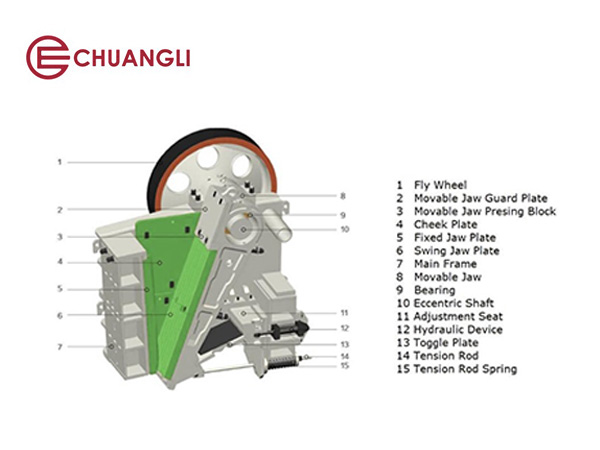
Establishing a robust feeding framework is essential for primary crushing success. A well-fed mining jaw crusher operates smoothly and predictably. You must understand the core principles of material presentation.
Proper cavity management separates high-performing plants from struggling operations. You must choose your feeding strategy carefully.
Choke feeding means keeping the chamber adequately full. The ideal fill level sits between 75% and 85%. This strategy promotes rock-on-rock crushing inside the cavity. It forces optimal material alignment as rocks travel downward. Choke feeding maximizes your reduction ratio. It also distributes abrasive wear evenly across the entire jaw face.
Trickle feeding introduces material in small, inconsistent batches. This approach starves the chamber. Rocks bounce erratically against the lower jaw. This causes excessive wear concentrated at the discharge zone. Trickle feeding ruins your reduction ratio. It also produces slabby, poorly shaped output material.
Choke Feeding vs. Trickle Feeding Comparison
Parameter | Choke Feeding | Trickle Feeding |
|---|---|---|
Cavity Fill Level | 75% to 85% full | Below 30% full |
Wear Distribution | Even across entire jaw die | Concentrated on lower jaw area |
Reduction Ratio | High and consistent | Poor and variable |
Energy Efficiency | Optimal energy utilization | Wasted idle energy draw |
You must remove undersized material before it enters the chamber. This process is called scalping. Heavy-duty grizzly feeders excel at this task. Fines and sticky clays cause severe packing inside the crusher. Packed material blinds the chamber corrugations. This prevents the jaws from gripping larger rocks properly. Scalping eliminates this packing risk. It prevents unnecessary energy draw. Bypassing fines also reduces mechanical strain on the toggle mechanism.
Material must drop centrally into the crushing chamber. Off-center feeding destroys jaw plates rapidly. However, existing plant footprints often force compromised feed angles. Tight spaces make perfect alignment difficult. You must structurally mitigate these layout challenges. Install heavy-duty rock boxes to alter the material trajectory. Add deflector plates inside the chute. These physical barriers force the rock stream toward the center of the cavity. Perfect alignment guarantees even crushing forces.
Modern aggregate plants rely on intelligent controls to maintain throughput. Upgrading your feed controls unlocks hidden production capacity. It also protects your capital equipment from operator errors.
You can categorize feed control systems into three distinct tiers. Manual operator control relies entirely on human judgment. Operators watch the chamber and adjust feeder speeds manually. This approach is slow and inconsistent. Semi-automated systems use basic timer relays. They offer slight improvements but lack dynamic responsiveness. Fully integrated closed-loop systems represent the gold standard. They adjust material flow continuously without human intervention.
Control System Tiers Chart
System Tier | Control Method | Responsiveness | Operator Dependency |
|---|---|---|---|
Manual Control | Visual estimation | Low | Very High |
Semi-Automated | Fixed timer settings | Medium | Moderate |
Closed-Loop | Real-time sensor feedback | Instantaneous | Minimal |
When selecting an automated feed system, you must evaluate several specific technologies. These components work together to optimize your crushing circuit.
Variable Frequency Drives (VFDs): These devices control the feeder motor speed precisely. VFDs automatically adjust speeds based on the crusher’s amperage. They also monitor the Closed Side Setting (CSS) load. If the crusher draws too much power, the VFD slows the feeder instantly.
Sensor Integration: Accurate cavity measurement requires reliable hardware. Ultrasonic or radar level sensors sit directly above the jaw. They measure the exact rock level inside the chamber. These sensors feed data back to the PLC. They maintain optimal cavity levels perfectly. They eliminate all operator guessing.
Throughput vs. Wear Trade-off: Automation creates a continuous, highly stable feed. This maximizes the output of a high capacity jaw crusher. A stable feed also allows you to predictably model wear part depreciation. You can forecast jaw die replacements accurately. This prevents unexpected maintenance shutdowns.
Upgrading your feed system sounds simple on paper. However, execution in the field presents unique physical and cultural challenges. You must plan for these realities before breaking ground.
Retrofitting existing structures requires careful engineering. Upgrading massive grizzly feeders involves significant physical effort. Legacy equipment often sits in cramped, inaccessible locations. You must assess the structural integrity of your current foundations. Adding automation to older panels might require complete electrical rewiring. You must calculate the downtime costs accurately. Sometimes, building a new primary station makes more sense than retrofitting an obsolete setup.
New technology often faces resistance from veteran staff. The "manual override" habit is incredibly strong. Operators feel safer controlling the feeder speed themselves. You must overcome this psychological barrier. Train your staff to trust the automated load-sensing systems. Show them how the sensors react faster than human reflexes. When operators embrace the technology, site safety and throughput improve dramatically.
Automation does not eliminate the need for physical inspections. You must establish a strong baseline for mechanical health. Neglected feeders will eventually ruin your primary crusher.
Feeder Liner Wear: Inspect pan liners weekly. Worn liners change the friction coefficient. This alters how material flows into the crusher.
Spring Tension and Drive Health: Check vibratory springs for cracks. Uneven spring tension causes erratic material distribution. Monitor the exciter drives for unusual heat or vibration.
Jaw Die Wear Profiles: Document the wear patterns on your jaw plates every month. Use these profiles as a diagnostic tool. Uneven wear instantly highlights upstream feed alignment issues.
Knowing exactly when to pull the trigger on a capital upgrade requires objective data. You must separate mere symptoms from actual root causes. A robust heavy duty jaw crusher performs flawlessly only when fed correctly.
Start by conducting a rigorous throughput bottleneck analysis. Is your primary crusher actually undersized for your target tonnage? Or is the feeder simply under-delivering? Often, a larger feeder solves the perceived crushing deficit. Next, calculate your return on investment thresholds. Look at the payback period of installing a heavy-duty vibratory grizzly feeder. Factor in the value of recovered downtime hours. Include the labor hours saved from eliminating manual blockage clearing.
You must demand specific guarantees from Original Equipment Manufacturers (OEMs). Do not accept vague performance promises. Ask the vendor for guaranteed feed rates under your specific material conditions. Ensure their control panels offer seamless SCADA integration capabilities. Check their parts network. Verify the immediate availability of heavy-duty wear liners. A reliable vendor acts as a long-term operational partner.
Do not commit to major capital expenditure immediately. We highly recommend conducting a comprehensive plant audit first. Perform a detailed feed-to-crusher material flow analysis. Track a full week of production data. Identify exactly where the material stalls. This objective data will guide your purchasing decisions accurately.
A heavy-duty primary crusher is only as reliable as the material flow it receives. Poor feeding practices generate massive mechanical stress and destroy profitability. You must analyze your cavity fill levels, drop trajectories, and scalping efficiency accurately. Shift your operational focus away from reactive unblocking. Move toward proactive feed regulation. Implement modern system automation to protect your capital equipment. By optimizing your feeder infrastructure, you ensure predictable yields and maximize plant uptime.
A: The ideal fill level sits typically between 75% and 85% full. This practice is known as choke feeding. It ensures proper material alignment and maximizes throughput. Choke feeding also distributes abrasive wear evenly across the entire surface of the jaw plates.
A: Scalping bypasses material already at or below the desired output size. This prevents severe chamber packing. It drastically reduces mechanical strain on the machine. Scalping also eliminates unnecessary wear on the crusher liners and prevents the motor from stalling.
A: Yes. Upgrading to VFDs and installing radar level sensors is highly feasible. These devices can usually integrate directly into existing PLCs. However, physical footprint constraints for heavy-duty grizzly replacements must be structurally verified before installation begins.
A: This is almost always a direct symptom of off-center feeding. The upstream material chute or feeder is likely discharging heavily to one side. You must fix this by performing a physical realignment or installing deflector plates inside the chute.


