
- All
- Product Name
- Product Keyword
- Product Model
- Product Summary
- Product Description
- Multi Field Search
Views: 0 Author: Site Editor Publish Time: 2026-05-21 Origin: Site


Selecting the wrong crusher does not just produce off-spec material. It bottlenecks your entire processing circuit and accelerates wear-part failure dramatically. In extreme cases, a mismatched machine inflates your cost-per-ton exponentially and causes severe operational delays. Equipment manufacturers offer dozens of proprietary models today. This sheer volume of choices makes it incredibly hard to select the right equipment for your site. However, underneath the shiny paint and complex brand names, almost all industrial crushing essentially boils down to three core mechanical categories.
This guide bypasses flashy marketing claims to evaluate these "Big Three" crusher types directly. We base our analysis strictly on mechanical realities, reduction ratios, and specific stage requirements. These stages include primary, secondary, or tertiary applications. You will learn exactly how to match your geological data to the perfect crushing mechanism and optimize your entire plant layout.
The Big Three: The industry standard classification groups crushers into Jaw (primary compression), Cone/Gyratory (high-capacity compression), and Impact (velocity-based shaping).
Decision Metric 1 (Material): Highly abrasive rock requires compression crushers (Jaw/Cone/Gyratory) to minimize wear costs, whereas softer rock is economically processed by Impact crushers.
Decision Metric 2 (Output Shape): Impactors yield premium cubical products required for asphalt/concrete, whereas jaw crushers produce angular, irregular slabs.
System Reality: No single machine does it all; optimal setups rely on staging primary breakers with secondary/tertiary refiners in a closed-circuit system.
Before you compare specific models, you must understand machine mechanics deeply. How a machine applies force dictates everything. It controls energy consumption. It also determines wear-part longevity. Engineers must assess these forces carefully before designing a plant. A poor mechanical match guarantees massive maintenance headaches downstream.
Compression forces material between two hard surfaces. A jaw, cone, or gyratory crusher uses this exact method. This approach offers high energy efficiency. It proves ideal for extreme rock hardness. You should use compression for highly abrasive ores. The mechanics literally squeeze the rock until it fractures under immense pressure.
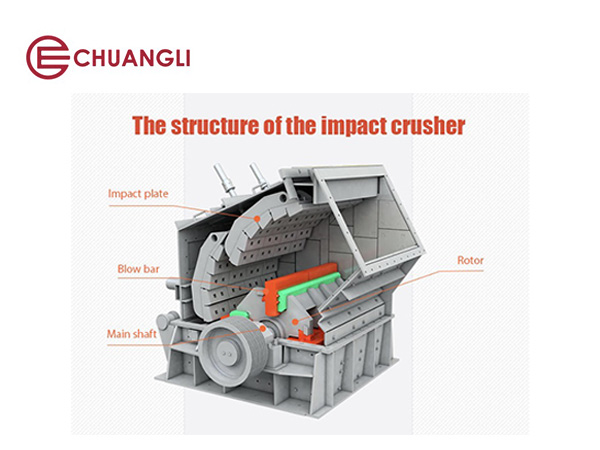
Impact crushers use kinetic energy. They create dynamic collisions to shatter rock. Horizontal Shaft Impactors (HSI) and Vertical Shaft Impactors (VSI) dominate this category. The machine throws the rock against steel aprons. Sometimes it throws rock against other rocks. These collisions follow natural cleavage lines in the stone. Impactors offer excellent shape control. However, they remain highly vulnerable to rapid wear. Processing abrasive ores will destroy impact wear parts quickly.
Secondary forces like attrition and shear often exist in processing. Roll crushers or sizers rely heavily on these forces. They typically handle specific, less abrasive applications. You might use them for coal or sticky clays. They rub or tear the material apart. You rarely use them for hard rock aggregate mining.
To simplify equipment selection, we categorize machines into three major groups. The table below outlines their primary forces and ideal applications.
Crusher Category | Primary Force | Typical Reduction Ratio | Ideal Material Application |
|---|---|---|---|
Jaw Crushers | Compression | 3:1 to 6:1 | Extremely hard, abrasive rock |
Cone / Gyratory Crushers | Compression | Up to 7:1 | Abrasive rock requiring high continuous feed |
Impact Crushers (HSI / VSI) | Kinetic Impact | 10:1 to 25:1 | Soft rock, limestone, and recycled concrete |
Jaw crushers act as the primary workhorse in most quarries. They feature a stationary jaw and a moving jaw. We call this a toggle mechanism. These two jaws create a V-shaped cavity. The machine essentially "chews" rock via pure compression. The moving jaw applies immense pressure. It forces the rock against the stationary plate until it breaks.
Typical reduction ratios range from 3:1 to 6:1. You will find them best for extremely hard, abrasive primary rock. They handle granite, basalt, and hard limestone effortlessly.
However, we must face a skeptical reality. Jaw crushers provide reliable performance and low operating expenses. Yet, they perform poorly at producing uniform shapes. They frequently create elongated slabs. They also remain prone to choking. This happens if you do not feed them properly. Excessive fines in the feed chamber will also cause major blockages.
Both cone and gyratory crushers operate on similar principles. They crush rock between an eccentrically rotating mantle and a stationary concave bowl. The mantle wobbles inside the bowl. It pinches the rock and releases it as it drops lower into the chamber.
The gyratory crusher acts as a primary stage behemoth. It features a steep crushing chamber. It also boasts a massive feed opening. It delivers unparalleled throughput. Reduction ratios can reach up to 7:1. Large-scale mining operations rely heavily on them. They allow for direct dumping from haul trucks. You rarely need pre-screening for these machines.
The cone crusher serves secondary or tertiary stages perfectly. It features a flatter chamber design. Engineers optimize the closed-side setting (CSS) for refining particle size carefully.
The skeptical reality involves high initial capital expenses. They require complex hydraulic maintenance. You must maintain strict "choke feeding" continuously. This means keeping the chamber completely full. A full chamber ensures proper rock-on-rock attrition. It optimizes particle shape. It also prevents uneven liner wear over time.
Impact crushers offer incredible versatility and excellent cubicality. Rapidly spinning rotors strike the material. Horizontal shaft models throw the rock against impact aprons. Vertical shaft models create rock-on-rock collisions. The rotors act like a bat hitting a baseball.
They deliver exceptional reduction ratios. An HSI model can reach 10:1 to 25:1. This massive reduction significantly reduces your need for multiple downstream stages.
They work best for softer limestone. They excel at recycling concrete. They produce highly uniform, cubical aggregate. Highway construction specifications require this exact shape for asphalt.
The skeptical reality is purely economic. They are not economically viable for abrasive materials. Granite or basalt will destroy their internals. You will face exorbitant wear-part replacement costs. Buying new blow bars and aprons weekly destroys your plant profitability.
Every machine type carries specific operational risks. Identifying these failure modes early prevents catastrophic downtime.
Jaw Crushers: Toggle plate snapping occurs frequently. This acts as a designed fail-safe. Uncrushable materials like excavator teeth sometimes enter the chamber. The toggle plate snaps to protect the main frame. You will also see localized jaw plate wear from uneven feeding habits.
Gyratory & Cone Crushers: Main shaft fatigue represents a severe threat. Lubrication system failures lead to catastrophic bearing damage quickly. Concave deformation results in chamber blockages. Oil temperature spikes often indicate impending mechanical failure.
Impact Crushers: Rotor imbalance remains the biggest threat. Uneven blow bar wear causes this severe imbalance. It results in devastating vibrational damage. These vibrations destroy bearings and structural mountings in hours.
Risk mitigation requires modern strategies. Modern plants transition from reactive maintenance daily. They adopt predictive condition monitoring instead. They install vibration and temperature sensors across the plant. These sensors catch specific failure modes early. You can prevent catastrophic downtime by analyzing this sensor data actively.
Selecting the right machine requires a systematic approach. Follow this evaluation framework to shortlist your best options.
Determine Compressive Strength & Abrasiveness: This serves as your absolute first filter. High silica content creates high abrasiveness. This instantly disqualifies impactors for primary stages. Forcing an impactor into high-abrasion applications causes immediate financial blowouts.
Calculate Required Reduction Ratio: Assess your maximum feed size. Compare it against your desired final product size. Imagine the gap requires a 15:1 reduction. You cannot force a single machine to achieve this safely. You must plan for multiple stages. You might route material from a jaw directly to a cone.
Evaluate Throughput vs. Initial Cost: A massive primary machine dominates in +2,000 ton-per-hour mining setups. However, a heavy-duty jaw crusher provides much better returns for standard aggregate operations. A 300-500 TPH plant rarely justifies massive infrastructure investments.
Analyze the Entire Circuit: Buyers rarely purchase just one unit. You must evaluate overall circuit compatibility. Consider your vibrating screens carefully. Look at your feeder-breakers. Map out your closed-circuit return conveyors. A bottleneck at the screen renders your high-capacity crusher completely useless.
Decision-making should isolate the "Big Three" categories systematically. Base your final choice entirely on your processing stage and material properties. Jaw crushers handle brute-force primary reduction perfectly. Primary compression machines dominate high-throughput, highly abrasive continuous processing environments. Impactors offer the ultimate shape control for less abrasive rock.
Before requesting quotes, you must take proactive action. Aggregate your geological data immediately. Find your compressive strength, moisture content, and abrasion index. Map your necessary reduction ratios across the plant. Finally, request manufacturers to provide simulation data. Base this simulation entirely on your specific feed grading.
A: Both utilize rotating mantles, but a gyratory model features a larger feed opening and a steeper chamber. Engineers design them strictly for primary crushing of massive boulders. Cone crushers serve secondary or tertiary stages to produce smaller, strictly controlled fractions.
A: Yes. Compression machines tend to create more angular or elongated particles. Velocity machines fracture rock along natural fault lines. This kinetic action yields the highly desirable cubical shape required for strict asphalt and concrete mixtures.
A: Yes, specifically Horizontal Shaft Impactors. However, you should only use them in low-abrasion applications like limestone or concrete recycling. Using them on hard, abrasive rock will result in unsustainable maintenance costs and rapid blow bar failure.


